
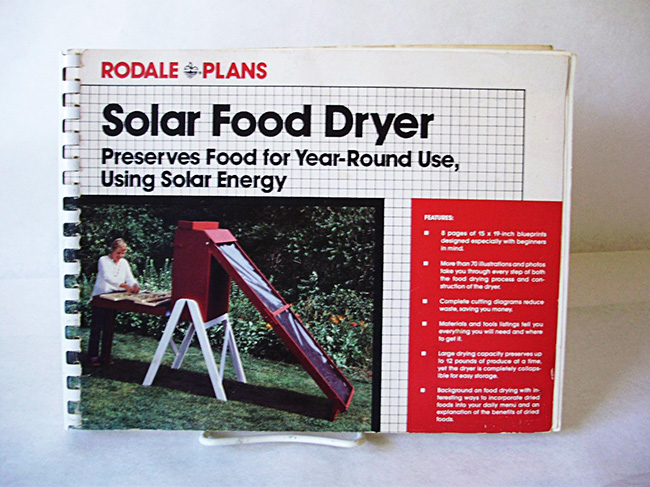
Improving the Rodale Solar Food Dryer
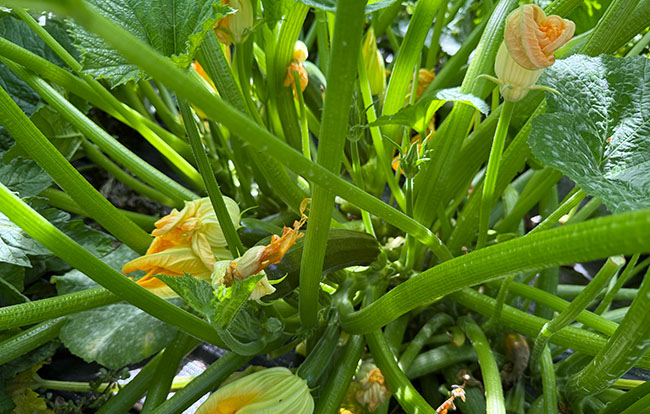
It’s 5 ft. tall and just never stops pumping them out…
Summertime in the garden at Aprovecho has us eating zucchini every day. We really only planted a couple of plants, but you know how it goes… The fridge can only hold so much and it’s rude to abandon it on doorsteps, so how to solve the excellent problem of garden abundance in an earth-friendly way? A solar powered food dryer and a big bag to store garlicky zucchini chips springs to mind.
The plans for this popular Rodale Solar Food Dryer were first published in 1981. When Dr. Larry Winiarski looked at this design, he called the lab together and taught a great class on dehydration. He taught us that the most important design principle for efficient drying is to remove the moisture as the food releases it. It is often easy to reach the relatively low temperatures needed for drying, ranging from 95°F to 140°F for various fruits and vegetables. Higher than necessary temperatures degrade the quality of dried food.
Larry improved the dryer by:
- Lowering the solar collector to the bottom of the drying box.
- Adding a 10’ tall, 8” in diameter black chimney to the top of the box, creating enough draft to remove moist air (more draft than dry air).
- Making sure that the hot air passed up through the food on screens.
- Adding a chimney damper to adjust draft velocity, controlling temperatures.
- In the summer, we covered half the solar collector (too hot!).
These days a simple web search will deliver many different DIY solar dryer designs, so keep these factors in mind when deciding what to build. And for expert guidance on safely preserving foods through dehydration, Oregon State University Extension has lots of resources, as does the National Center for Home Food Preservation and your local Extension Service.


Leave a Reply
Want to join the discussion?Feel free to contribute!