
Health: Reducing PM2.5 by ~90%
Although airtight biomass heating stoves in the USA on average emit a lot more smoke than Southern Hemisphere cook stoves per unit of time, legally mandated chimneys move it outside where it is diluted enough to generally meet WHO standards. That’s great! Anyone who uses a wood burning heating stove knows that a chimney is necessary as a first step in the attempt to protect indoor air quality. Then, combustion efficiency must be high when density of wood stove use approaches urban levels, external air becomes stagnated, etc.
After decades of trying, research shows how hard it is to protect health with biomass cook stoves. It is not hard to design a cookstove with a chimney that achieves ~50% thermal efficiency when sufficient pot surface area is exposed to hot gas flow, but more than a chimney is needed for best protection.
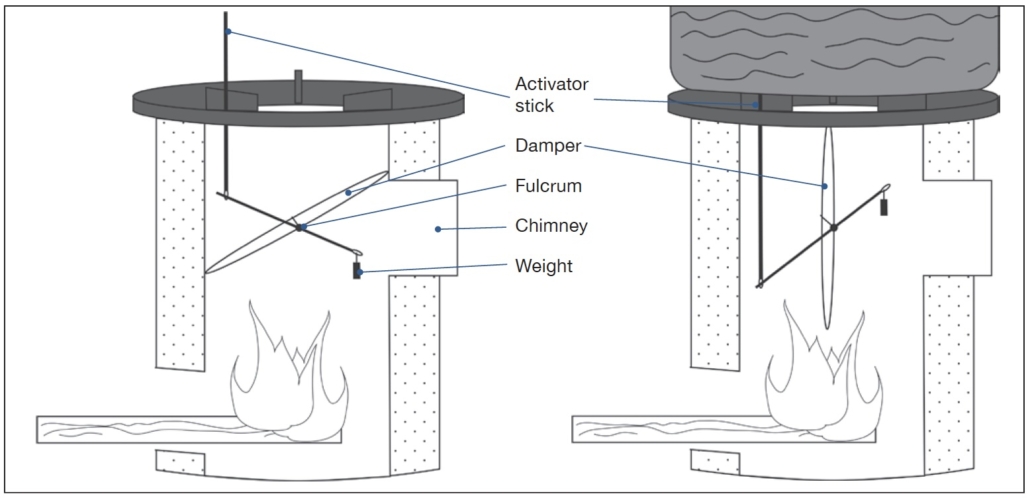
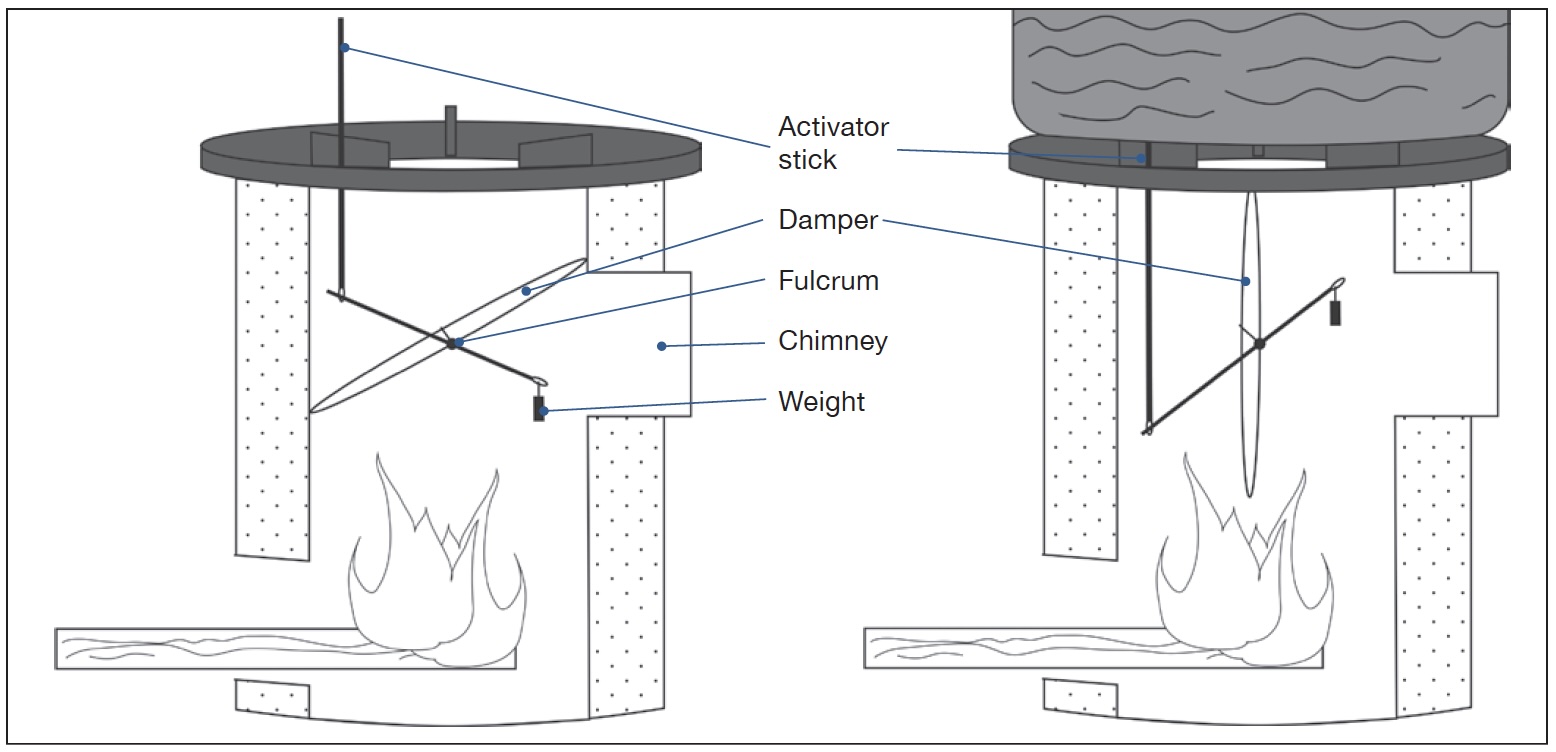
I wonder if a vented airtight stove with sunken pot or pots (with or without griddle) would be “vale la pena,” worth the hassle? Dr. Kirk Smith spent ten years trying to protect health in Guatemala by removing smoke from houses with chimneys added to plancha cookstoves. The cooking pot would sit over a hole in the plancha for best heat transfer, but when the pot was removed from the stove smoke would pour into the kitchen through the open hole still harming health. He might say that an automatic damper must close when the pot is removed to keep smoke out of the room.
We have made a first attempt, illlustrated above.
See more details and drawings of an auto damper design on page 105 of Clean Burning Biomass Cookstoves, 2nd Edition, 2021. (Part 1, Main content)
I wonder if Kirk’s arduous experiment would have been more successful at protecting health if an auto damper had been installed?

Leave a Reply
Want to join the discussion?Feel free to contribute!