
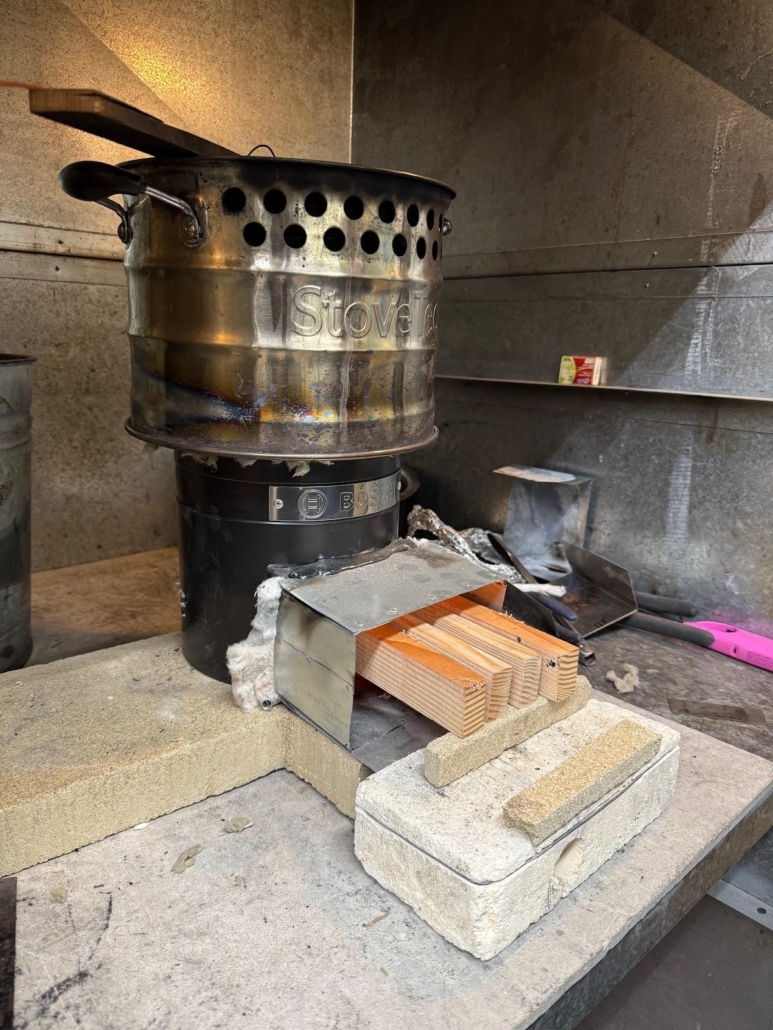
Improving Heat Transfer Efficiency (HTE)
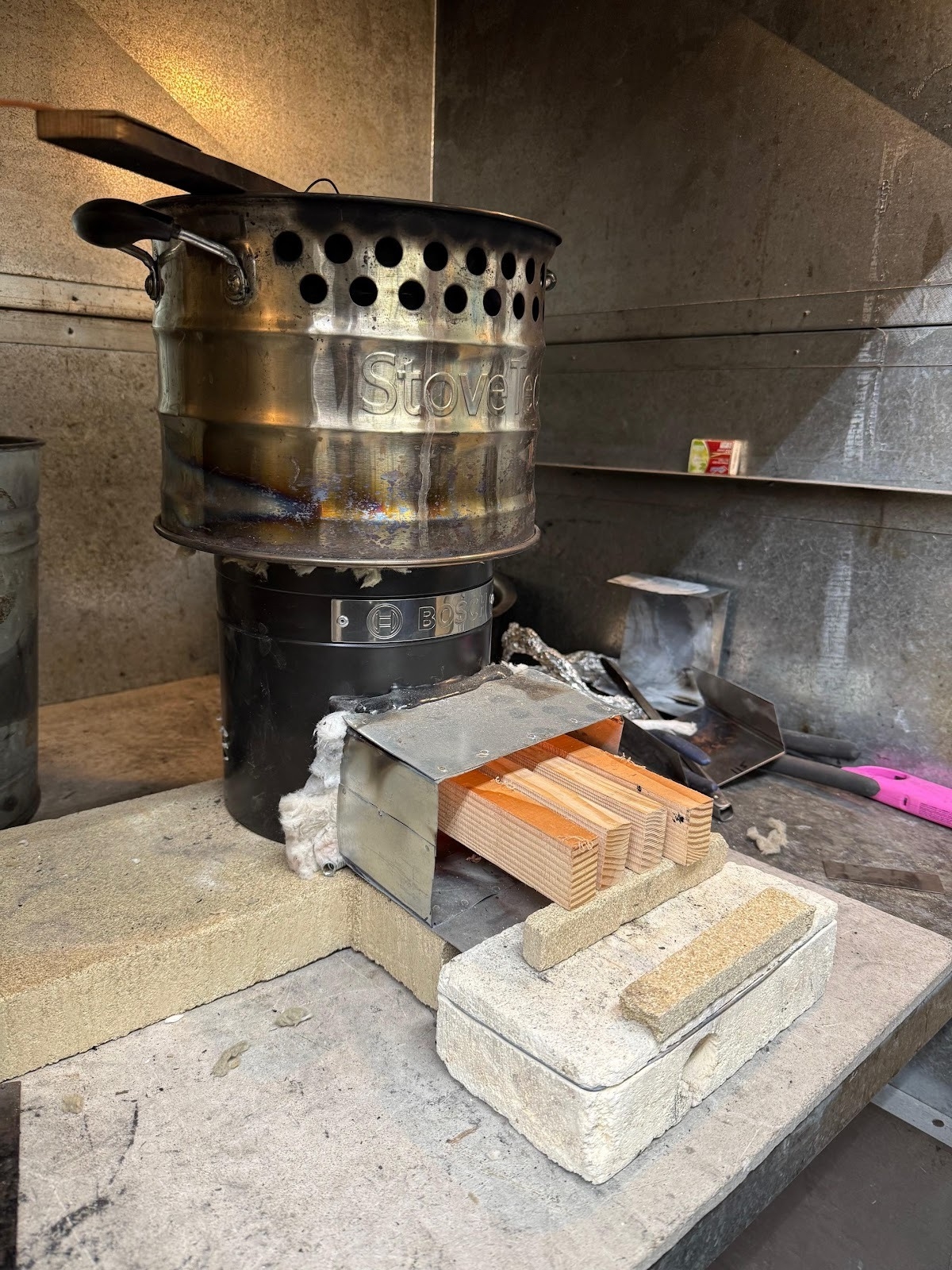
HTE Design principles: Increase temperature and velocity of gases, exposed area in pot(s), radiation, proximity of gases to pot(s) without decreasing velocity. Use dry wood. Doubling temperature, velocity and area doubles heat transfer efficiency! Doubling radiation is much more effective!
Wood Moisture Content: This is often a critical variable. Ideally, wood should have a moisture content of less than 20%. Water in the wood must be evaporated before the wood can burn, consuming energy that could go into the food. Burning wood with 30% moisture content can reduce effective heat output by nearly 40% compared to dry wood.
Excess Air Ratio: Too little air into the combustion chamber causes smoke and incomplete combustion. Too much air also cools the gases before they hit the pot, decreasing how much energy enters the food. In natural draft cook stoves, velocity is usually something like one meter per second which is SLOW.
Design: Influences how much of the heat is successfully captured or lost. Dr. Larry Winiarski suggested maintaining constant cross sectional area throughout when designing a stove. A gap of 6mm to 8mm seems to work well in a pot skirt. The narrow channel forces hot gases to “scrub” against the pot surface, thinning the insulating boundary layer of still air.
Materials: High-mass stoves, often used for an hour or so, absorb a significant amount of heat. Using lightweight, insulating materials ensures heat is reflected back toward the pot rather than being “stolen” by the stove.
Bigger Pots: For highest thermal efficiency 1.) Expose as hot as possible gases at 2.) Fastest natural draft velocity 3.) As close as possible to the bottom and sides of 4.) The biggest possible pot. ARC now uses the constant cross sectional area of the stove reduced by 25% to calculate the gap for a pot skirt. We then fine tune prototypes under the emissions hood trying to find a desired compromise between thermal efficiency and emissions of CO and PM2.5.
Increasing HTE
| Variable | Target | Effect on HTE |
| Wood Moisture | < 20% | Increases by reducing energy wasted |
| Channel GapIn Pot Skirt | 6mm – 8mm | Increases (~25%) |
| Insulation | High | Increases by reducing losses |
| Pot Lid | Keep humidity above water at 100% | Increases by decreasing heat loss via evaporation |
| Excess Air | Keep Temperatures Hot | Increases when not more air than needed is supplied |


Leave a Reply
Want to join the discussion?Feel free to contribute!