
ARC and The Breathing Space Project in India
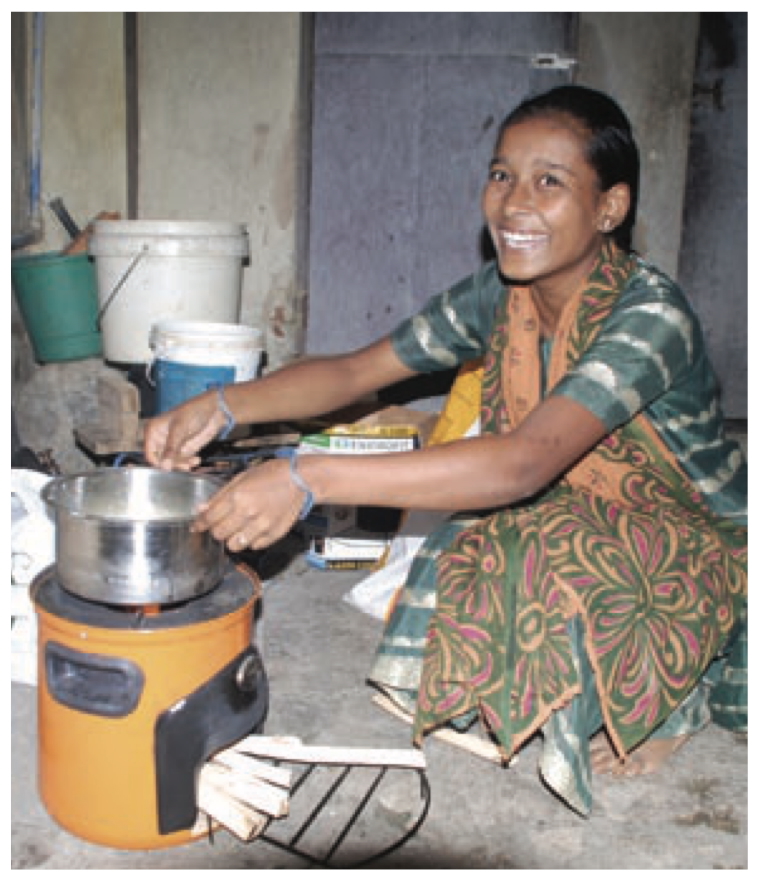
The Shell Foundation hired Aprovecho Research Center between 2003 and 2004 to bring Dr. Larry Winiarski’s Rocket stove technology to Southern India.
Shell Foundation Breathing Space Project
The Mission: The goal was to develop an efficient and effective Rocket stove to lower fuel wood consumption and protect health by reducing indoor air pollution. Aprovecho found an established Co-Op of potters in Sri Lanka that was selling 250,000/year two-pot burnished ceramic stoves with chimneys for $4 in southern India. This design was originally promoted by Mahatma Gandhi in 1934 and was commercially successful, protecting health when the chimney was functional. ARC worked with the Co-Op to improve the design and production. ARC also developed a medium scale factory in Chennai, called Skill Mech that was intended to mass manufacture/sell sheet metal Rocket stoves.
The Outcome: Neither stove option was accepted by Shell Foundation. Eventually, a distribution partner Envirofit manufactured a sheet metal Rocket stove in China starting with 90,000 stoves made at Shengzhou Stove Manufacturer and sold in southern India. Aprovecho began working on other projects and assisted Dr. Mouhsine Serrar and Prakti Design Labs near Chennai to manufacture sheet metal stoves at Skill Mech. ARC also partnered with Shengzhou Stove Manufacturer in China resulting in ~ 7 million low mass Rocket stoves sold to date. SSM sells both lightweight, abrasion resistant refractory ceramic Rocket stove combustion chambers ($2.43 in a box) and stainless steel stoves. The majority of sales involve carbon credit revenue. The new International Refractory Ceramic Institute at SSM teaches local projects how to make market priced Tier 3/3/3 (or above) stoves using the refractory ceramic, lightweight combustion chambers.
Field Testing Crucial: Field testing with cooks in eighteen villages in Southern India revealed a major technical limitation. The natural draft Rocket stove was not burning clean enough to completely meet the health-protecting emission goals of Shell Foundation and University of California Berkeley and later as quantified in the ISO Tiers of Performance. ARC spent the following decades researching how to design and build affordable stoves with increased heat transfer and combustion efficiency. These stoves are being produced by various factories.
Shengzhou Stove Manufacturer: SSM began collaborating with ARC 19 years ago and sells a full range of health protecting cook stoves evolved from extensive lab and field-testing. They sell~ two million modern Rocket stoves per year as well as Tier 4/4/4 (or above) forced draft and natural draft Top Lit Up Draft stoves, Jet-Flames, institutional stoves with chimneys, charcoal stoves and a TLUD biomass lantern.
Osprey Foundation Support: A four-year (2026-2030) grant from the Osprey Foundation supports the new International Refractory Ceramics Institute at SSM and a global effort lead by ARC to bring less than $10 retail priced Tier 3/3/3 stoves into use. Coupling Tier 3 PM2.5 stoves with doubled or tripled Air Change Rate in the cooking environment can reach Tier 4 and 90% health protection.


Leave a Reply
Want to join the discussion?Feel free to contribute!