
Aprovecho
  • Home
  • Our Work
    • Emissions Testing Equipment
    • Lab and Field Testing Services
    • Stove Design and Manufacturing Support
    • Consulting and Capacity Building
  • Resources
    • Newsletters
    • Publications
    • Video Gallery
    • Software
  • About
  • Donate
  • Click to open the search input field Click to open the search input field Search
  • Menu Menu
sticks and charcoal start to combust in a rocket stove

Fluidized Bed Combustion, Top Lit up Draft, and the Jet-Flame

December 30, 2020/0 Comments/in Cleaner Burning Technologies, Jet-Flame, Rocket Stoves, TLUDs

The Jet-Flame was developed from combustion concepts used in fluidized beds and TLUDs.

Fluidized Bed
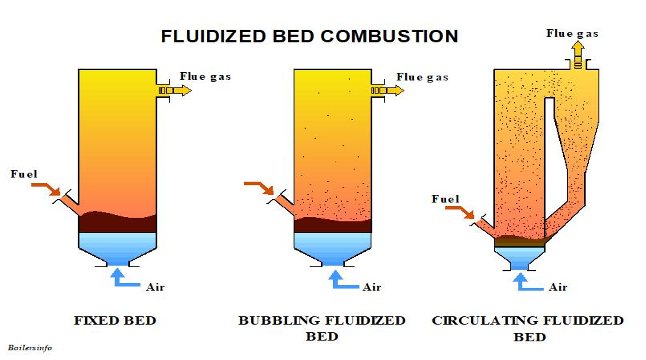
fluidized bed combustion diagrams

“In its most basic form, fuel particles are suspended in a hot, bubbling fluidity bed of ash and other particulate materials (sand, limestone etc.) through which (under air) jets of air are blown to provide the oxygen required for combustion or gasification. The resultant fast and intimate mixing of gas and solids promotes rapid heat transfer and chemical reactions within the bed.”   https://en.wikipedia.org/wiki/Fluidized_bed_combustion

Top Lit Up Draft

diagram explaining how a top loaded up draft stove works

The TLUD uses under air flowing up through the fuel to transport wood gas into the hot layer of charcoal and flame above the fuel assisting more complete combustion efficiency.

Cleanly Starting the Jet-Flame

High velocity under air jets blow up into the lit charcoal placed on top of small sticks of wood. When the charcoal and wood are on fire, long pieces of wood are pushed into the made charcoal to start a Rocket Jet-Flame without making visible smoke. The sticks of wood are burned at the same rate as the continual production of charcoal creating a cleaner combustion process related to a fluidized bed and the TLUD.

sticks and charcoal start to combust in a rocket stove

Charcoal over wood is lit.

bed of charcoal in rocket stove

The charcoal becomes superheated with jets blowing up into the pile.
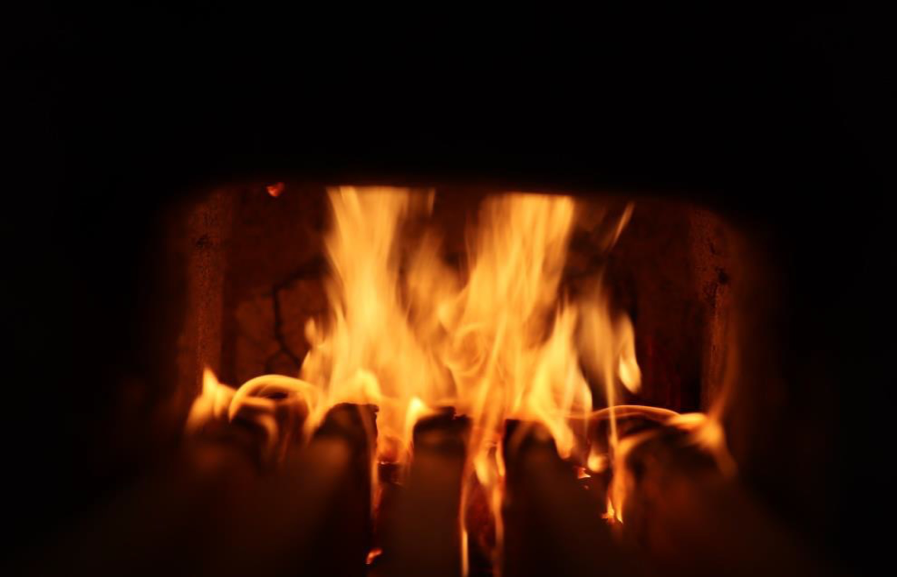
sticks burning in rocket stove

After 30 seconds, long sticks of wood are pushed against the burning charcoal creating flame.

https://aprovecho.org/wp-content/uploads/2020/12/12.30.burning1.png 420 672 Kim Still https://aprovecho.org/wp-content/uploads/2015/11/Aprovecho-Logo.png Kim Still2020-12-30 15:48:502020-12-30 15:48:53Fluidized Bed Combustion, Top Lit up Draft, and the Jet-Flame
Chart showing how more air exchanges reduces indoor air pollution from cooking

Air Exchange Rates and the ISO Tiers of Performance

December 16, 2020/1 Comment/in Indoor Air Quality, News, Rocket Stoves, TLUDs
Chart describing the influence of air exchange per hour rates on the concentration of PM2.5 in a 30 cubic meter room. Higher air exchanges equal lower PM2.5 concentrations.
Using the ISO box model, Sam Bentson has calculated how increased ventilation helps a classic Rocket stove (around 30 mg/minute of PM2.5) and a modern TLUD burning pellets (about 5mg/minute PM2.5) to protect health.

In the lab, we are used to thinking of the ISO Tiers as static, based on how much pollution enters a 30 cubic foot kitchen during four hours of cooking with 15 air exchanges per hour. However, in 2018 ISO published 19867-3 that further explains how, for example, increasing the air exchange rate (ACH) changes the Tier rating. Generally, doubling the air exchange rate cuts pollution (PM2.5 and CO) in half.

In a low ventilation situation (10 ACH), Tier 4 requires that the emissions of CO are lower than 2.2 grams per megajoule delivered to the pot (g/MJd). But in a higher ventilation condition (30 ACH) the stove can be three times dirtier, emitting up to 7 g/MJd, and still be in Tier 4. Cooking outside is often employed by the cooks we work with because smoke is bothersome and unhealthy.

ISO 19867-3 reports that studies of air exchange rates have found a lot of variation in ventilation, from 4 ACH in very tight buildings to 100 ACH outside in the fresh air. When I lived on a ranch in Mexico, most of the cooking took place outside under a veranda (which also made it easier to smell the wonderful homemade coffee brewing in the early mornings). When Sam Bentson carefully measured the ventilation rate under our veranda in Oregon he also found that when a gentle breeze was blowing (2 MPH) the air exchange rate per hour was around 100.

At 100 ACH, with so much dilution occurring outside, achieving Tier 4 for PM2.5 and CO is easier. In our experience, the most successful and cost effective interventions are situation dependent. We find that a combination of approaches to protecting health enables a welcome adaptability to the actual and interwoven circumstances.

https://aprovecho.org/wp-content/uploads/2020/12/12.16.20-ACH-chart.png 484 936 Kim Still https://aprovecho.org/wp-content/uploads/2015/11/Aprovecho-Logo.png Kim Still2020-12-16 14:19:552020-12-16 14:26:04Air Exchange Rates and the ISO Tiers of Performance
Page 3 of 3123
Search Search

Latest Newsletters

  • Photo of the Rodale Solar Food Dryer book
    Improving the Rodale Solar Food DryerJuly 31, 2026 - 9:02 am
  • ARC and The Breathing Space Project in IndiaJuly 24, 2026 - 2:45 pm
  • a closed black box next to an open, semi-transparent box
    Using Black Box and Open Box Experimental DesignJuly 17, 2026 - 1:30 pm
  • Executive Director’s Report – Celebrating Aprovecho’s 50th AnniversaryJune 19, 2026 - 12:22 pm
  • Improving Solar Distillation: Two-Stage DistillationMay 29, 2026 - 1:15 pm
  • What’s Cooking at AprovechoMay 14, 2026 - 11:07 am
  • Photo of a solar still
    Improving Solar Distillation, Part 1April 3, 2026 - 1:32 pm
  • Michael Saul with some test data
    Real World Temperatures in a Pot SkirtMarch 27, 2026 - 2:17 pm
  • Aprovecho Research Center logo
    Requesting input: What technologies are most needed in households?March 13, 2026 - 12:43 pm
  • Testing improvements on a Bosch rocket stove
     Improving Heat Transfer Efficiency (HTE)March 6, 2026 - 2:59 pm
  • The Stainless Steel Winiarski Stove TopFebruary 27, 2026 - 3:36 pm
  • Cross- sectional illustration of a biomass cookstove with auto damper
    Health: Reducing PM2.5 by ~90%February 13, 2026 - 2:47 pm
  • The Icy-Ball : A Heat Driven RefrigeratorJanuary 30, 2026 - 3:20 pm
  • Stove parts at SSM
    A Hospitable Chinese Environment for Improved CookstovesJanuary 23, 2026 - 2:15 pm
  • A cookstove production line at SSMNordica MacCarty
    Tier 3 Biomass StovesJanuary 16, 2026 - 4:21 pm
  • Don’t Let The Flame Touch The PotDecember 19, 2025 - 2:04 pm
  • Early Rocket Stove Research at Aprovecho Still Rings TrueDecember 11, 2025 - 3:59 pm
  • Cook Stoves for EthosDecember 4, 2025 - 4:09 pm
  • A Clean Open Fire?October 31, 2025 - 9:25 am
  • a pot of cooked rice
    Turn Down RatioOctober 24, 2025 - 1:46 pm

Archives

Aprovecho Research Center

Mailing: PO Box 1175, Cottage Grove, OR 97424, USA

Visit: 76132 Blue Mountain School Road, Cottage Grove, OR 97424, USA
541-767-0287
info@aprovecho.org

© Copyright - Aprovecho Research Center | Digital Partner: Wildwood SEO
Scroll to top Scroll to top Scroll to top