Aprovecho
  • Home
  • Our Work
    • Emissions Testing Equipment
    • Lab and Field Testing Services
    • Stove Design and Manufacturing Support
    • Consulting and Capacity Building
  • Resources
    • Newsletters
    • Publications
    • Video Gallery
    • Software
  • About
  • Donate
  • Click to open the search input field Click to open the search input field Search
  • Menu Menu
sticks and charcoal start to combust in a rocket stove

Fluidized Bed Combustion, Top Lit up Draft, and the Jet-Flame

December 30, 2020/0 Comments/in Cleaner Burning Technologies, Jet-Flame, Rocket Stoves, TLUDs

The Jet-Flame was developed from combustion concepts used in fluidized beds and TLUDs.

Fluidized Bed

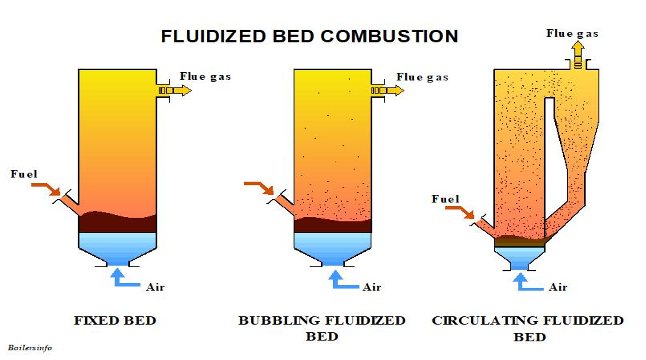
fluidized bed combustion diagrams

“In its most basic form, fuel particles are suspended in a hot, bubbling fluidity bed of ash and other particulate materials (sand, limestone etc.) through which (under air) jets of air are blown to provide the oxygen required for combustion or gasification. The resultant fast and intimate mixing of gas and solids promotes rapid heat transfer and chemical reactions within the bed.”   https://en.wikipedia.org/wiki/Fluidized_bed_combustion

Top Lit Up Draft

diagram explaining how a top loaded up draft stove works

The TLUD uses under air flowing up through the fuel to transport wood gas into the hot layer of charcoal and flame above the fuel assisting more complete combustion efficiency.

Cleanly Starting the Jet-Flame

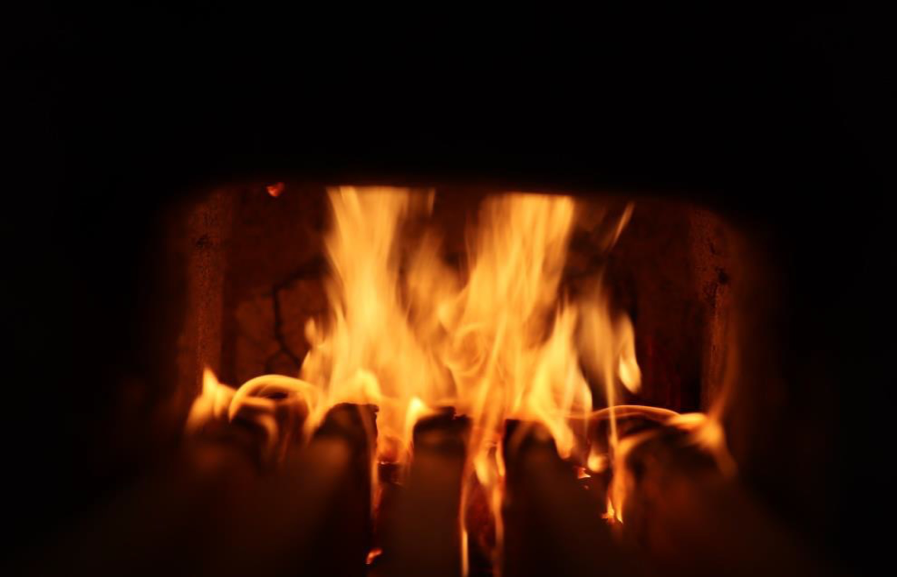
High velocity under air jets blow up into the lit charcoal placed on top of small sticks of wood. When the charcoal and wood are on fire, long pieces of wood are pushed into the made charcoal to start a Rocket Jet-Flame without making visible smoke. The sticks of wood are burned at the same rate as the continual production of charcoal creating a cleaner combustion process related to a fluidized bed and the TLUD.

sticks and charcoal start to combust in a rocket stove

Charcoal over wood is lit.

bed of charcoal in rocket stove

The charcoal becomes superheated with jets blowing up into the pile.

sticks burning in rocket stove

After 30 seconds, long sticks of wood are pushed against the burning charcoal creating flame.

https://aprovecho.org/wp-content/uploads/2020/12/12.30.burning1.png 420 672 Kim Still https://aprovecho.org/wp-content/uploads/2015/11/Aprovecho-Logo.png Kim Still2020-12-30 15:48:502020-12-30 15:48:53Fluidized Bed Combustion, Top Lit up Draft, and the Jet-Flame

It is easy to get a Tier 5 score for PM2.5 and CO!

December 23, 2020/0 Comments/in Indoor Air Quality, ISO Standards

It’s fascinating to read the ISO 19867 Standards for cookstoves and I agree with a lot of it. Many of us in the ‘stove world’ were involved for years in creating those documents. One of the big improvements is testing stoves at high, medium, and low power while reporting the results with the firepower.

We forgot to do that in the International Working Agreement started in Peru at the Partnership for Clean Indoor Air meeting in 2011. Since stoves generally make fewer emissions at low power it was a temptation to reduce the firepower and achieve a higher score on the Tiers. Since firepower was not seen on the Tier scorecard, it was really not possible to compare performance. And as we know, people tend to like high power stoves. It’s so great that this problem has been fixed in ISO 19867.

How to get a Tier 5 score for emissions? Use a chimney.

Santa Claus in a chimney
Santa understands the importance of chimneys… Happy Holidays from the Aprovecho team!

The chimney transports most or all of the PM2.5 and CO out of the kitchen. Only “fugitive” emissions escape into the room. In ISO 19867 the fugitive emissions are used for the emission rate values. For unvented stoves, total emissions are used for the emission rate values. Just make sure that your chimney and stove do not leak.

It makes sense. Here in rural Oregon, unfortunately, smoke pours out of chimneys all day and night as folks stay warm with wood. Heating stoves can be very smoky! The airtight chimney and stove get essentially all of the smoke outside of the building where concentrations are and stove get essentially all of the smoke outside of the building where concentrations are diluted.

Now, of course, at ARC we try to combine high combustion efficiency with effective chimneys. We need to protect the quality of the outside air, as well. The combination is intended to protect indoor and outdoor air. If the outdoor air is polluted it is less effective in lowering harmful concentrations. Combustion efficiency is always great and to protect health it must increase when the outside air quality is degraded. In Beijing you don’t want to add one more milligram of smoke into the air!

An indoor/outdoor air quality planning tool.

Sam Bentson created an excel spreadsheet that explains how protecting indoor and outdoor air quality are related. You can download the spreadsheet here, and learn how to use it for project planning: aprovecho.org/portfolio-item/project-planning/

https://aprovecho.org/wp-content/uploads/2016/03/project-planner-2-crop-600x335.png 333 600 Kim Still https://aprovecho.org/wp-content/uploads/2015/11/Aprovecho-Logo.png Kim Still2020-12-23 16:04:492020-12-23 16:04:51It is easy to get a Tier 5 score for PM2.5 and CO!
Chart showing how more air exchanges reduces indoor air pollution from cooking

Air Exchange Rates and the ISO Tiers of Performance

December 16, 2020/1 Comment/in Indoor Air Quality, News, Rocket Stoves, TLUDs
Chart describing the influence of air exchange per hour rates on the concentration of PM2.5 in a 30 cubic meter room. Higher air exchanges equal lower PM2.5 concentrations.
Using the ISO box model, Sam Bentson has calculated how increased ventilation helps a classic Rocket stove (around 30 mg/minute of PM2.5) and a modern TLUD burning pellets (about 5mg/minute PM2.5) to protect health.

In the lab, we are used to thinking of the ISO Tiers as static, based on how much pollution enters a 30 cubic foot kitchen during four hours of cooking with 15 air exchanges per hour. However, in 2018 ISO published 19867-3 that further explains how, for example, increasing the air exchange rate (ACH) changes the Tier rating. Generally, doubling the air exchange rate cuts pollution (PM2.5 and CO) in half.

In a low ventilation situation (10 ACH), Tier 4 requires that the emissions of CO are lower than 2.2 grams per megajoule delivered to the pot (g/MJd). But in a higher ventilation condition (30 ACH) the stove can be three times dirtier, emitting up to 7 g/MJd, and still be in Tier 4. Cooking outside is often employed by the cooks we work with because smoke is bothersome and unhealthy.

ISO 19867-3 reports that studies of air exchange rates have found a lot of variation in ventilation, from 4 ACH in very tight buildings to 100 ACH outside in the fresh air. When I lived on a ranch in Mexico, most of the cooking took place outside under a veranda (which also made it easier to smell the wonderful homemade coffee brewing in the early mornings). When Sam Bentson carefully measured the ventilation rate under our veranda in Oregon he also found that when a gentle breeze was blowing (2 MPH) the air exchange rate per hour was around 100.

At 100 ACH, with so much dilution occurring outside, achieving Tier 4 for PM2.5 and CO is easier. In our experience, the most successful and cost effective interventions are situation dependent. We find that a combination of approaches to protecting health enables a welcome adaptability to the actual and interwoven circumstances.

https://aprovecho.org/wp-content/uploads/2020/12/12.16.20-ACH-chart.png 484 936 Kim Still https://aprovecho.org/wp-content/uploads/2015/11/Aprovecho-Logo.png Kim Still2020-12-16 14:19:552020-12-16 14:26:04Air Exchange Rates and the ISO Tiers of Performance
Thumbnail from Rocket Stove 2020 video about height and weight

New Video: Rocket Stove 2020 – Height & Weight

December 9, 2020/1 Comment/in Materials, Rocket Stoves, Videos

Why is a heavy stove an inefficient stove? A tall combustion chamber makes a lot of draft to keep a fire roaring, how can that be a bad thing? What is TARP-V and how will it improve your stove? Dean Still has the answers for you in the latest Rocket Stove 2020 Video.

Here is the Ten Stove Design Principles poster. Many more helpful documents are also linked on the Publications page.

https://aprovecho.org/wp-content/uploads/2020/12/12.9.20-height-weight.jpg 309 580 Kim Still https://aprovecho.org/wp-content/uploads/2015/11/Aprovecho-Logo.png Kim Still2020-12-09 17:38:082020-12-09 17:38:10New Video: Rocket Stove 2020 – Height & Weight
Man driving tractor with front loader attachment, man watches in background

Food

December 2, 2020/0 Comments/in Uncategorized

In 1976, Aprovecho was started in Guatemala after a terrible earthquake. The founders invented a stove called the Lorena as part of trying to help folks with their farms and forests. In 1981, Aprovecho came back to Oregon and bought 40 acres to learn how to maintain a forest, grow food, and make stoves. The hardware and software were OK but the wetware was not.

Profile photos of Carl Jung and Sigmund Freud

Sigmund Freud and Carl Jung broke up in 1913. Freud had picked Jung as his successor, but Jung made an unforgivable joke at dinner that ended their relationship. Freud was sure that the most powerful human motivation was infantile sexuality. Jung commented that eating must be at least equally important?

That was it!

Sure, stoves are interesting, but food is certainly more important. I lived on a ranch in Mexico for eight years and when the food ran out we weren’t lighting fires to cook. We were out farming, hunting, fishing, or gathering edibles from the desert.

Growing food has always been important at Aprovecho. So has maintaining the health and productivity of our forest/woodlot. Oregon is cold and too rainy in the winter, and warm and too dry in the summer, so we’ve had to learn how to adapt to this place and how to grow food productively.

Man in cowboy hat blows compost onto field
Man driving tractor with front loader attachment, man watches in background

We are lucky that our garden at Blue Mountain is bottom land and is easily accessible. We buy inexpensive compost made from food scraps by friends in Eugene and our neighbor, Butch, bought a rototiller for his tractor a couple of years ago that he uses, free of charge, to till our ½ acre garden. Butch also gives us unlimited manure from his cows, so friendship has made growing food a lot easier.

Being friends with the folks on our road increases our feeling of safety, and friendly neighbors can agree to growing a wide variety of foods from garden to garden. Being friends is important on lots of levels and when food is involved, breaking up, especially because of an ephemeral idea, is something to be carefully considered. 

Maybe better to share a slice of that good pumpkin pie?

 Happy Thanksgiving!

Man on tractor plowing a field, Aprovecho campus in background
https://aprovecho.org/wp-content/uploads/2020/12/12.2.20-butch-dean.jpg 438 584 Kim Still https://aprovecho.org/wp-content/uploads/2015/11/Aprovecho-Logo.png Kim Still2020-12-02 16:54:022020-12-02 16:54:05Food
link to Rocket Stove 2020 YouTube video

New Rocket Stove 2020 Video: Carbon Neutral Fuels

November 25, 2020/0 Comments/in Cleaner Burning Technologies, Rocket Stoves, Videos

How can burning wood, agricultural waste or even cow dung be a carbon neutral energy source? How do you start a fire without making a lot of smoke? How can a metal skirt around a cooking pot help with fuel efficiency? Dean Still has the answers for you in this new video.

Find out more about the Jet-Flame combustion accessory used in this video at www.jet-flame.com.

https://aprovecho.org/wp-content/uploads/2020/11/11.25.20-carbon-neutral.jpg 309 580 Kim Still https://aprovecho.org/wp-content/uploads/2015/11/Aprovecho-Logo.png Kim Still2020-11-25 13:36:082020-11-25 13:36:11New Rocket Stove 2020 Video: Carbon Neutral Fuels
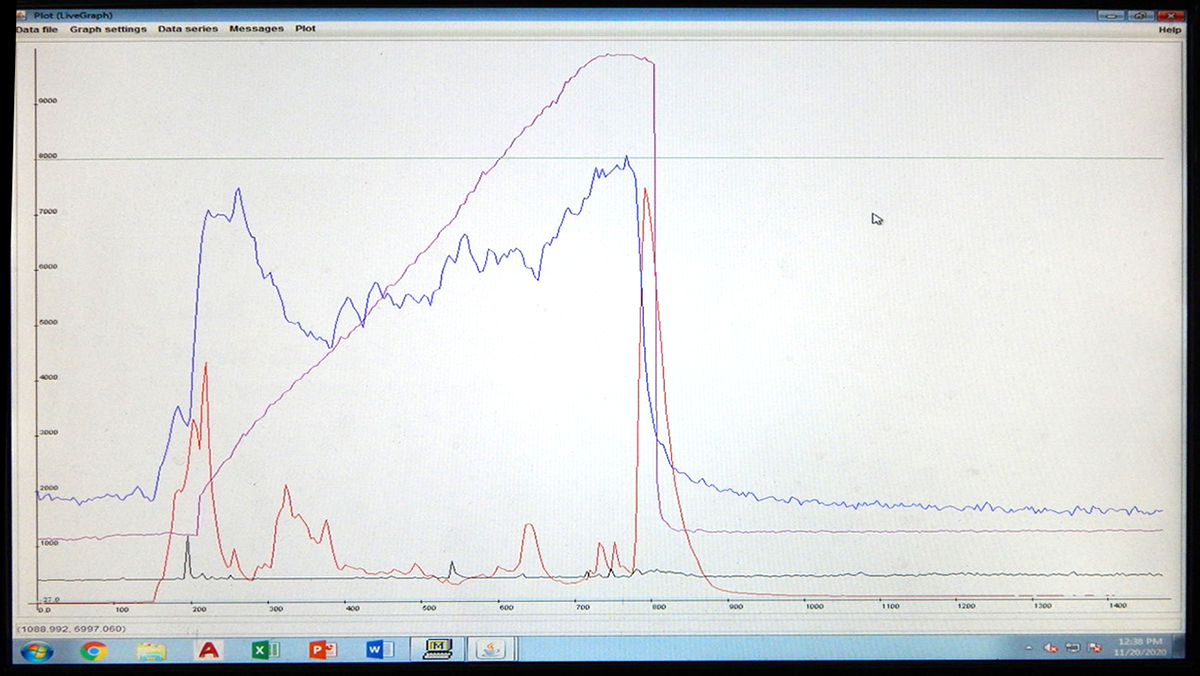
Computer screen shows emissions rates as lines on a graph

Designing an Optimized Forced Draft Insert

November 20, 2020/0 Comments/in Cleaner Burning Technologies, LEMS

David Evitt, ASAT COO, and Sam Bentson, ARC GM, have been adding capacity to the Laboratory Emissions Monitoring System (LEMS). So far, four oxygen sensors, temperature probes in the fire and under the pot, and a velocity sensor give us a clearer picture of what’s going on in a stove. Knowing PM2.5, CO, CO2, and firepower at the same time, combined with the improved testing protocols in ISO 19867, is making us more confident that iterative improvement can be accomplished relatively quickly.

During a test, the LEMS screen shows real time emission rates of CO2 (blue line), CO (red line), and PM2.5 (black line).

Starting in early December, Dean Still and a research assistant will be doing 20 tests per week to create an optimized forced draft insert that cleans up the combustion of found biomass fuels and improves thermal efficiency in open fires, high mass, and Rocket stoves. A screen in the hood showing real-time data helps reduce the needed repetitions to achieve statistical confidence.  The 90% confidence interval has to be less than 1/3 of the range of the Tier that contains the conservative bound of the confidence interval. When Tier Confidence Interval Range is equal to or less than 0.33, the number of tests is deemed sufficient to meet the Aprovecho data repeatability quality standard (seven to nine tests each for high, medium, and low power are usually sufficient).

David is in grad school with Dr. Nordica MacCarty at Oregon State University and the ARC lab is supplying them with information. We’ll keep you in the loop as we make discoveries. Part of the goal is to keep the optimized insert as close to a $10 wholesale price as possible.

Here we go! Eco-Science marching forward!

https://aprovecho.org/wp-content/uploads/2020/11/11.20.20-screen.jpg 676 1200 Kim Still https://aprovecho.org/wp-content/uploads/2015/11/Aprovecho-Logo.png Kim Still2020-11-20 15:20:352020-11-20 15:20:38Designing an Optimized Forced Draft Insert
YouTube Video explains the importance of mixing for clean combustion

New Rocket Stove 2020 Video: Mixing

November 13, 2020/0 Comments/in Rocket Stoves, Videos

In this video, Dean Still explains why mixing air into flame is important for cleaner combustion. He uses several Rocket Stoves to demonstrate the effects of both natural draft and forced draft secondary air jets. Which style is more effective? Watch to find out!

For a simple way to add mixing to a Rocket Stove, check out the Jet-Flame.

https://aprovecho.org/wp-content/uploads/2020/11/11.13.20-Mixing.jpg 309 580 Kim Still https://aprovecho.org/wp-content/uploads/2015/11/Aprovecho-Logo.png Kim Still2020-11-13 15:07:052020-11-13 15:34:16New Rocket Stove 2020 Video: Mixing
Ornate chimneys at Hampton Court Palace, London

Chimneys!

November 6, 2020/1 Comment/in Indoor Air Quality
Ornate chimneys at Hampton Court Palace, London
Multiple ornate chimneys grace Hampton Court Palace.

An Important Health Intervention

When cooking stoves are tested in the field the emissions of PM2.5 and CO are often higher than lab results (Roden et al., 2009). The wood can be wetter, the fire is made with less attention, and many real life variables create higher levels of pollution. It’s hard to imagine that unvented cookstoves for indoor use can be invented that will protect health when too much wet fuel is pushed quickly into the combustion chamber. Even modern cars make a lot of smoke when trying to combust bad quality gasoline.

Clean burning stoves require clean fuel just like automobiles. The sticks of wood need to be relatively dry and the metering of the sticks into the combustion chamber cannot happen too quickly. Perhaps batch fed pellet stoves will have more similar lab and field results if the pellets are well made, dry, and clean?

It’s illegal to install most types of unvented combustion devices in the United States and Europe. Even natural gas room heaters and gas cooking stoves are vented. For realistic protection of health, ARC consultants try to attach chimneys to biomass cookstoves whenever possible. When the stove smokes at least the pollution goes outside above the roof line where it becomes diluted.

Health Supportive Alternatives

Adding a chimney is not always a possibility. In these cases, it is helpful to move cooking out of the closed kitchen, for example under a veranda in the open air. Increasing air exchange rates by cooking under a veranda has been shown to dramatically lower concentrations of harmful PM and CO. Even opening the door and window in a test kitchen lowered the particulate matter 1-hour concentrations between 93% to 98% compared to the closed kitchen, and the CO 1-hour concentrations were 83% to 95% lower (Grabow et al., 2013).

Hundreds of years ago in Europe chimneys were developed as a first step to take smoke and gases outside of the kitchen. In the United States millions of wood burning heating stoves are used indoors every winter. Chimneys transport the pollution outdoors where it is mixed with the outside air.

References

Roden, C. A., Bond, T. C., Conway, S., Osorto Pinel, A. B., MacCarty, N., & Still, D. (2009). Laboratory and field investigations of particulate and carbon monoxide emissions from traditional and improved cookstoves. Atmospheric Environment, 43(6), 1170–1181. https://doi.org/10.1016/j.atmosenv.2008.05.041

Grabow, K., Still, D., & Bentson, S. (2013). Test Kitchen studies of indoor air pollution from biomass cookstoves. Energy for Sustainable Development, 17(5), 458–462. https://doi.org/10.1016/j.esd.2013.05.003

https://aprovecho.org/wp-content/uploads/2020/11/11.6.20-chimneys.jpg 584 778 Kim Still https://aprovecho.org/wp-content/uploads/2015/11/Aprovecho-Logo.png Kim Still2020-11-06 13:42:412020-11-06 13:42:43Chimneys!
Dean Still explains time and temperature in a Rocket Stove in a YouTube video

New Video Series “Rocket Stove 2020”

October 29, 2020/1 Comment/in Rocket Stoves, Videos

Dean Still and Sam Bentson have started collaborating on a series of videos that explain the basics of how Rocket Stoves work, so that stove designers and stove users can get the best performance out of this popular stove design. In this first installment, “Time and Temperature,” Dean explains the importance of high combustion temperature in a Rocket stove where there is limited time to burn up smoke particles. He demonstrates how the Jet-Flame (www.jet-flame.com) helps to increase combustion temperature by blowing air under the fire.

Be sure and subscribe to Sam’s YouTube channel so you never miss an episode! New videos will be added every other week.

https://aprovecho.org/wp-content/uploads/2020/10/10.30.20-youtube-thumbnail.jpg 309 580 Kim Still https://aprovecho.org/wp-content/uploads/2015/11/Aprovecho-Logo.png Kim Still2020-10-29 13:10:032020-10-29 13:22:59New Video Series “Rocket Stove 2020”
Page 21 of 31«‹1920212223›»
Search Search

Latest Newsletters

  • Photo of the Rodale Solar Food Dryer book
    Improving the Rodale Solar Food DryerJuly 31, 2026 - 9:02 am
  • ARC and The Breathing Space Project in IndiaJuly 24, 2026 - 2:45 pm
  • a closed black box next to an open, semi-transparent box
    Using Black Box and Open Box Experimental DesignJuly 17, 2026 - 1:30 pm
  • Executive Director’s Report – Celebrating Aprovecho’s 50th AnniversaryJune 19, 2026 - 12:22 pm
  • Improving Solar Distillation: Two-Stage DistillationMay 29, 2026 - 1:15 pm
  • What’s Cooking at AprovechoMay 14, 2026 - 11:07 am
  • Photo of a solar still
    Improving Solar Distillation, Part 1April 3, 2026 - 1:32 pm
  • Michael Saul with some test data
    Real World Temperatures in a Pot SkirtMarch 27, 2026 - 2:17 pm
  • Aprovecho Research Center logo
    Requesting input: What technologies are most needed in households?March 13, 2026 - 12:43 pm
  • Testing improvements on a Bosch rocket stove
     Improving Heat Transfer Efficiency (HTE)March 6, 2026 - 2:59 pm
  • The Stainless Steel Winiarski Stove TopFebruary 27, 2026 - 3:36 pm
  • Cross- sectional illustration of a biomass cookstove with auto damper
    Health: Reducing PM2.5 by ~90%February 13, 2026 - 2:47 pm
  • The Icy-Ball : A Heat Driven RefrigeratorJanuary 30, 2026 - 3:20 pm
  • Stove parts at SSM
    A Hospitable Chinese Environment for Improved CookstovesJanuary 23, 2026 - 2:15 pm
  • A cookstove production line at SSMNordica MacCarty
    Tier 3 Biomass StovesJanuary 16, 2026 - 4:21 pm
  • Don’t Let The Flame Touch The PotDecember 19, 2025 - 2:04 pm
  • Early Rocket Stove Research at Aprovecho Still Rings TrueDecember 11, 2025 - 3:59 pm
  • Cook Stoves for EthosDecember 4, 2025 - 4:09 pm
  • A Clean Open Fire?October 31, 2025 - 9:25 am
  • a pot of cooked rice
    Turn Down RatioOctober 24, 2025 - 1:46 pm

Archives

Aprovecho Research Center

Mailing: PO Box 1175, Cottage Grove, OR 97424, USA

Visit: 76132 Blue Mountain School Road, Cottage Grove, OR 97424, USA
541-767-0287
info@aprovecho.org

© Copyright - Aprovecho Research Center | Digital Partner: Wildwood SEO
Scroll to top Scroll to top Scroll to top